

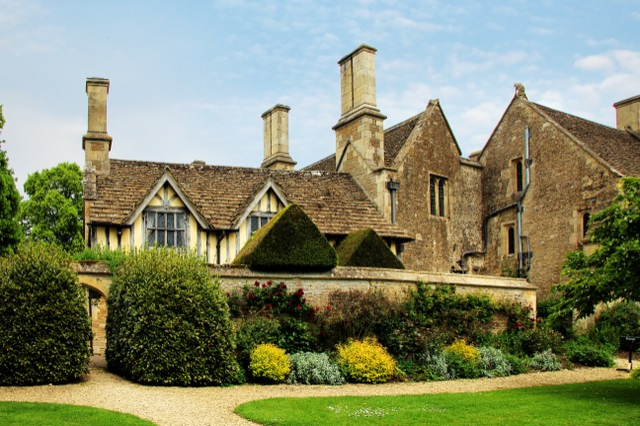
Avebury Manor and Circle of Stones
19th October 2026. Members £20 pp. Non-Members £25 pp.
Depart Croome at 9:30 a.m.
Avebury Manor, Wiltshire sits quietly on the edge of the largest prehistoric stone circle in the world. Built in the 16th Century on the site of 12th century Benedictine Priory, the house is a remarkable survivor, enduring over 500 years of changing owners and residents.
In 1114, land at Avebury was given by the Crown to a Benedictine Abbey near Rouen in France and a Royal
Charter was granted by Henry I, which gave the monks at Avebury certain freedoms. The Bishop of
Salisbury allowed the monks to have a chapel in the priory where they could hold private religious services.
Alongside the two monks, the priory had 600 sheep and two horses.
The manor was purchased by William Sharington (1495–1553) in 1547, a courtier to King Henry VIII and under-treasurer of the Bristol Mint, who had also purchased Lacock Abbey.Sharington commissioned a survey of themanor house in 1548 which suggests that the earlier 15th Century building survives as the core of the manorhouse that can be seen today, although many alterations have taken place since then. Alexander Keiller (1889–1955) was a Scottish archaeologist and heir of his family’s successful marmalade business, James Keiller & Sons, who in 1925 bought and excavated the nearby Windmill Hill, a neolithic causewayed enclosure. In the 1930s he turned his attention to investigating The Avenue, a double row of stones leading away from Avebury towards the south-east and then excavated the henge itself. He
purchased the Avebury estate in 1937. In 1938 he opened the Alexander Keiller Museum in the old stable building at Avebury, so that he could display the artefacts from his excavations. In 1943, Alexander sold the Avebury estate to the National Trust for £12,000 which was the value of the agricultural land, but the manor house was listed separately and deemed too expensive to buy. In 1986, the Stonehenge and Avebury landscape was added to the UNESCO World Heritage Site List.The manor house was owned by
various individuals until 1991 when the National Trust was able to purchase it.
There is a tea room, a pub in the village and a sculpture exibition.
Plus - Avebury henge and stone circles are one of the greatest marvels of prehistoric
Britain. Built and much altered during the Neolithic period, roughly between 2850 BC
and 2200 BC, the henge survives as a huge circular bank and ditch, encircling an
area that includes part of Avebury village. Within the henge is the largest stone circle
in Britain - originally of about 100 stones - which in turn encloses two smaller stone
circles.
This is an English Heritage Site but has free entry
Sign in to your The Friends of Croome account to gain access to our member only benefits
Ticket options
19th October 2026. Members £20 pp. Non-Members £25 pp.
Depart Croome at 9:30 a.m.
Avebury Manor, Wiltshire sits quietly on the edge of the largest prehistoric stone circle in the world. Built in the 16th Century on the site of 12th century Benedictine Priory, the house is a remarkable survivor, enduring over 500 years of changing owners and residents.
In 1114, land at Avebury was given by the Crown to a Benedictine Abbey near Rouen in France and a Royal
Charter was granted by Henry I, which gave the monks at Avebury certain freedoms. The Bishop of
Salisbury allowed the monks to have a chapel in the priory where they could hold private religious services.
Alongside the two monks, the priory had 600 sheep and two horses.
The manor was purchased by William Sharington (1495–1553) in 1547, a courtier to King Henry VIII and under-treasurer of the Bristol Mint, who had also purchased Lacock Abbey.Sharington commissioned a survey of themanor house in 1548 which suggests that the earlier 15th Century building survives as the core of the manorhouse that can be seen today, although many alterations have taken place since then. Alexander Keiller (1889–1955) was a Scottish archaeologist and heir of his family’s successful marmalade business, James Keiller & Sons, who in 1925 bought and excavated the nearby Windmill Hill, a neolithic causewayed enclosure. In the 1930s he turned his attention to investigating The Avenue, a double row of stones leading away from Avebury towards the south-east and then excavated the henge itself. He
purchased the Avebury estate in 1937. In 1938 he opened the Alexander Keiller Museum in the old stable building at Avebury, so that he could display the artefacts from his excavations. In 1943, Alexander sold the Avebury estate to the National Trust for £12,000 which was the value of the agricultural land, but the manor house was listed separately and deemed too expensive to buy. In 1986, the Stonehenge and Avebury landscape was added to the UNESCO World Heritage Site List.The manor house was owned by
various individuals until 1991 when the National Trust was able to purchase it.
There is a tea room, a pub in the village and a sculpture exibition.
Plus - Avebury henge and stone circles are one of the greatest marvels of prehistoric
Britain. Built and much altered during the Neolithic period, roughly between 2850 BC
and 2200 BC, the henge survives as a huge circular bank and ditch, encircling an
area that includes part of Avebury village. Within the henge is the largest stone circle
in Britain - originally of about 100 stones - which in turn encloses two smaller stone
circles.
This is an English Heritage Site but has free entry
Our payments are processed using : Payyo